
The consultation is usually treated as a formality: a chat, a quote, a date in the diary. In fact it is the most important appointment in the process, because almost everything that decides how a Morpheus8 course goes is settled in that room rather than the treatment chair. Who holds the handpiece. How deep the needles go. Whether anyone checks the medicines you take. The one independent systematic review of radiofrequency microneedling that excluded industry funded studies names user error as the highest conferred risk of complications, which makes a consultation a screening exercise, and you the one doing the screening. Here is what to ask.
Who will actually hold the handpiece
Start here, because it matters more than the machine does. The manufacturer’s operator manual states that the equipment is for use only by qualified medical professionals trained in the particular technique to be performed, that radiofrequency energy can cause injury if used improperly, and that the higher the energy applied, the greater the possibility of unintended thermal damage. That is the manufacturer talking, not a critic.
So ask three plain questions. Who will perform the treatment, by name. What their clinical registration is, and with which regulator. What training they have had on this specific device, as opposed to microneedling or radiofrequency in general.
Add a fourth if a non-clinician is running the consultation, which is common: will the person in front of me be the person treating me.
What the law requires, and why that depends on where you are standing
Most people assume a licence sits behind all of this. In England, it does not, at least not yet.
There is currently no national licensing scheme in force for non-surgical cosmetic procedures in England. The powers to create one exist under section 180 of the Health and Care Act 2022, and the Government consulted between 2 September and 28 October 2023, receiving over 11,800 responses. The proposal sorts procedures into green, amber and red tiers. Microneedling on its own sits in green, the lowest risk band, and radiofrequency treatments sit in amber. The combination of the two is named in the amber tier explicitly, radiofrequency plus microneedling given as the example of a hybrid device. That is this treatment, in the Government’s own words.
Under those proposals a practitioner who is not a regulated healthcare professional would need a licence and oversight by a named regulated one. Several respondents argued that amber procedures should require a Level 7 qualification, defined as advanced practice in the JCCP competency framework; the Government did not mandate one. Further consultation and Parliamentary time are needed before the scheme takes effect, so in England today the honest answer to what qualification the law requires is: none specific to this procedure.
Scotland is a materially stricter place to ask the same question. Independent healthcare services there must register with Healthcare Improvement Scotland, and running an unregistered one is an offence under section 10Z9 of the National Health Service (Scotland) Act 1978. The Scottish Government’s June 2025 consultation response proposes a three group model. Microneedling to a depth of 1.5 mm and radiofrequency treatments sit in a locally licensed group. Microneedling deeper than 1.5 mm, and anything from the lower groups using an anaesthetic, sits in a group restricted to an appropriate healthcare professional: a doctor, dentist, prescribing nurse or prescribing pharmacist. Morpheus8 runs at 1 to 7 mm and is typically performed under topical or local anaesthetic, so it lands in that restricted group twice over. No commencement date has been published, and what that means for a Scottish clinic today is worth reading first.
Which tip, what depth, what energy, and why those
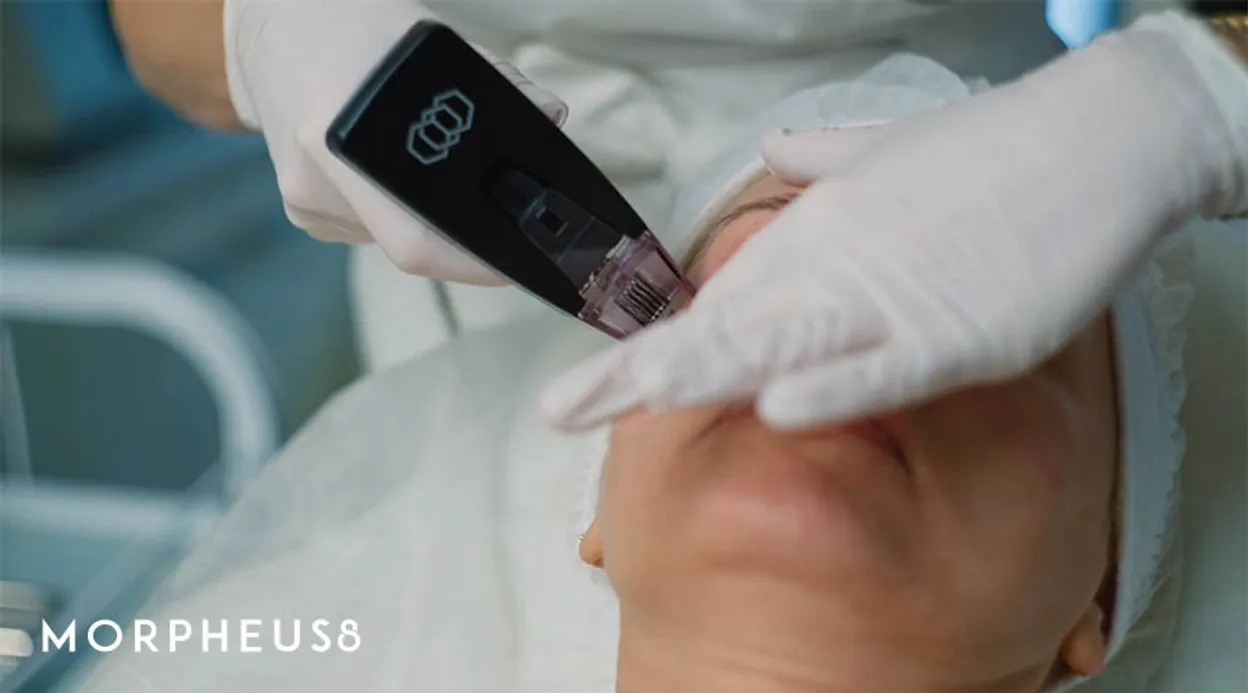
Morpheus8 is not a single procedure. It is a platform with four tips and a depth dial, and the settings chosen for you decide which tissue is heated and how recovery goes. Ask which tip, the depth in millimetres, the energy level, and the reasoning behind each. The numbers are all published, so this is a question with a checkable answer. Two follow-ups are then worth more than they look.
The first is skin type. The manual advises that Fitzpatrick types V and darker VI are treated with caution, that energy should not exceed level 20 in those types, and that treatment starts at minimum energy and escalates by five levels per visit at 3 to 4 week intervals. If your skin is brown or black and none of that comes up unprompted, the practitioner is not working from the manual they were trained on.
The second is a test spot. The manual instructs operators to use the lowest output setting necessary and to perform a test spot in a non-conspicuous area before the first full session. Asking for one is not asking for a favour, it is asking for the protocol. While you are there, ask whether the tip is single use: the manual says they are, and that reuse risks cross contamination and infection.
What the course costs, and what the price includes
UK pricing is wide, and the width is itself informative. Across published clinic price lists a single session runs from roughly £200 for a small area such as the chin to £1,800 at the top of the London market, and a course of three from about £560 to £3,240. A full face sits between £500 and £1,580 a session, or £1,650 to £2,200 for three.
Part of that spread is the operator: one London clinic lists a full face at £1,050 with a senior doctor and £1,580 with its lead doctor, the same room and the same platform, a different pair of hands.
Published protocol is typically three sessions spaced 3 to 6 weeks apart under topical or local anaesthetic, and most course prices assume three. Not all do: one advertised London body package at £3,835 covers six, which makes a straight comparison misleading. So ask how many sessions your quote covers, whether anaesthetic and a review appointment are included, which areas, and what a further session costs if the result falls short. Then weigh the total against what the evidence actually supports, not against the headline price of a first session.
The questions a good clinic asks you
Screening runs both ways, and the manufacturer’s contraindication list is long enough that a thorough consultation is obvious when you are in one.
The device related exclusions come first: a pacemaker, an internal defibrillator or any other metallic or electronic implant anywhere in the body, and permanent implants in the treatment area such as plates, screws or piercings. The medical list runs to current or previous cancer and pre-malignant moles, pregnancy and breastfeeding, severe cardiac conditions, impaired immunity, poorly controlled diabetes or thyroid disease, coagulopathies or anticoagulants in the last 10 days, and recurrent herpes simplex in the area, treated only under a prophylactic regime. Then the skin: active sores, psoriasis, eczema or rash, a history of keloids or abnormal wound healing, tattoos or permanent makeup you intend to keep, and skin tanned or irritated in the previous two weeks.
Timing matters as much as history. The manual excludes isotretinoin within the previous 6 months, facial surgery within the previous year, dermabrasion, resurfacing or a deep peel within 3 months, and prior light, laser or radiofrequency treatment in the area within 2 to 3 weeks, or 6 to 12 weeks after ablative fractional resurfacing. Filler, collagen or fat injection rules the site out until the product has dissipated, up to 6 months.
If nobody asks about any of it, you have learned something no brochure would have told you.
What they should tell you before you ask
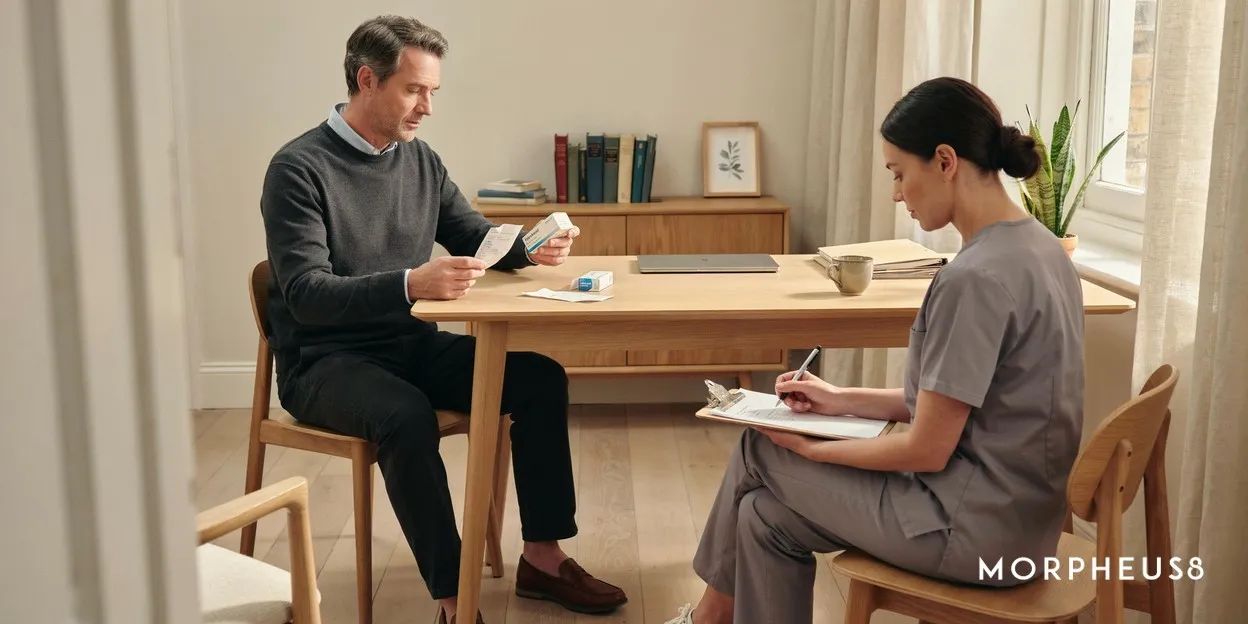
Three things belong in an honest consultation whether or not you raise them. The first is the regulatory position. Morpheus8 is 510(k) cleared by the FDA, not FDA approved. Clearance is a substantial equivalence pathway, not a finding that a device works. The current cleared wording covers dermatologic procedures where coagulation or contraction of soft tissue, or haemostasis, is needed. No Morpheus8 clearance names wrinkles, skin tightening, acne scars, cellulite, stretch marks or fat reduction.
The second is safety. On 15 October 2025 the FDA published a safety communication on radiofrequency microneedling reporting burns, scarring, fat loss, disfigurement, nerve damage and the need for surgical repair, and stating that this is a medical procedure, not a cosmetic treatment. The ASLMS and ASDS have since advised practitioners to name those risks on consent forms. Ask to see the form at the consultation rather than on the day, and read what it lists.
The third is the evidence, or the shape of it. No sham controlled randomised trial of Morpheus8 has been published, and the independent review that excluded industry funded work rates the radiofrequency microneedling evidence base at Level of Evidence 5, the lowest rung. Ask too which downtime figure you are being quoted: published protocols describe 2 to 5 days, while the manufacturer’s own manual describes oedema and crusting resolving over 1 to 3 weeks.
A practitioner who chose your settings deliberately will enjoy every one of these questions. One who cannot answer them has told you something no before and after photograph can.
Taking the list into the room
None of this is a reason to distrust the room you are sitting in. It is a way of finding out quickly whether the person opposite is working from documents or from a brochure, and the difference is not subtle once you start asking.
One thing to do first. If what is bothering you is a changing mole, a rash, active acne that needs medical management, or any skin change you have not had looked at, see your GP or a dermatologist before booking any aesthetic procedure. Diagnosis comes before treatment, and no cosmetic consultation substitutes for it.
If your questions are the ordinary ones, bring them to us. Book a consultation with us and we will go through the practitioner, the tip, the depth in millimetres, the energy, the screening list and the full cost of a course in plain numbers, plus an honest view of whether this is the right tool for what is bothering you at all.
At a glance
The consultation as a screening tool, weighed honestly
+ Reasons in favour
- Almost every technical answer you need is published somewhere. Tip, depth in millimetres, energy level and the manufacturer's own operator warnings all sit in documents, so a clinic can be held to them
- The contraindication list is long and unusually specific, which makes it easy to tell within ten minutes whether you are being screened or simply booked in
- The manufacturer's manual asks for a test spot in a non-conspicuous area before a first full session, so requesting one is asking for the protocol rather than a favour
− Reasons for caution
- Some of the most important answers do not exist for anyone to give. No sham-controlled randomised trial of Morpheus8 has been published, so no practitioner can tell you how much of a result comes from the device itself
- The regulatory answers are moving targets. England has no licensing scheme in force, and the Scottish proposals that would restrict this procedure to healthcare professionals have no published commencement date
- A consultation is a sales conversation as well as a clinical one, and the person answering your questions usually has a commercial interest in the answer
Frequently asked questions
The short version.
01Who is legally allowed to perform Morpheus8 in the UK?
In England, there is currently no national licensing scheme in force for non-surgical cosmetic procedures, so no qualification is specifically required by law. The Government's proposed scheme would place radiofrequency plus microneedling hybrid devices in the amber tier, where a practitioner who is not a regulated healthcare professional would need a licence and oversight by a named one. Scotland is stricter: its June 2025 consultation response would restrict microneedling deeper than 1.5 mm, and any procedure using an anaesthetic, to a doctor, dentist, prescribing nurse or prescribing pharmacist. Morpheus8 meets both of those descriptions.
02Is it reasonable to ask for a test spot before a full session?
Yes, and it is not an unusual request. The manufacturer's operator manual instructs operators to perform a test spot in a non-conspicuous area before the first full treatment, and to use the lowest output setting necessary. A practitioner who follows the manual will already have planned one. A practitioner who treats the request as fussy is telling you which document they work from.
03What should a Morpheus8 quote actually include?
Ask how many sessions the price covers, because packages are usually for three but not always: one advertised London body package at £3,835 covers six sessions rather than three. Then ask whether anaesthetic is included, whether a review appointment is included, what an additional session costs if the result falls short of what you hoped for, and exactly which areas are covered. Published protocols typically run to three sessions spaced 3 to 6 weeks apart.
04What will the clinic need to know about my medical history?
A great deal, if they are following the manufacturer's contraindication list. Pacemakers, defibrillators and metal or electronic implants anywhere in the body; pregnancy and breastfeeding; any history of cancer or pre-malignant moles; impaired immunity; poorly controlled diabetes or thyroid disease; bleeding disorders or anticoagulants in the last 10 days; cold sores in the treatment area; keloid scarring or poor wound healing; isotretinoin in the previous 6 months; recent fillers, facial surgery, peels or laser work; and recent tanning. If none of this is asked, that is your answer about the screening.
05Why does the price vary so much between clinics?
Partly area and city, and substantially who performs the treatment. One London clinic lists a full face at £1,050 with a senior doctor and £1,580 with its lead doctor, in the same clinic on the same platform. Across the UK market, single sessions run from roughly £200 for a small area to £1,800 at the top end, and courses of three from around £560 to £3,240.