
Ask a clinic what Morpheus8 will do for you and the answers arrive quickly: collagen, tightening, texture. Ask what the machine will actually be set to, and the conversation often slows down. That is backwards, because the settings are the treatment. Morpheus8 is not one procedure but a menu: four different tips, a depth dial that runs from half a millimetre to seven millimetres, and an energy scale from 5 to 60. The combination chosen for you decides which tissue is heated, how the session feels, how long you take to heal, and what can go wrong. This article walks through that menu in plain numbers, so that a quote turns into something you can actually picture.
Four tips, and two of them are different procedures
The platform does not have a single applicator. The manufacturer’s operator manual lists four tips, and the differences between them are not cosmetic.
| Tip | Pins | Needle depth | Energy levels | Intended use in the manual |
|---|---|---|---|---|
| Prime | 12 | 1 to 4 mm | 5 to 60, capped at 30 at 1 mm | Small areas that are difficult to manoeuvre around |
| Standard | 24 | 1 to 7 mm, in 1 mm steps | 5 to 60, capped at 30 at 1 mm | Dermal and subdermal treatment |
| Resurfacing, or T tip | 24, blunt and uncoated | Fixed at 0.5 mm, depth control disabled | 5 to 30 | Superficial, epidermal treatment |
| Body | 40 | 2 to 7 mm, in 1 mm steps | 5 to 60 | Large body areas |
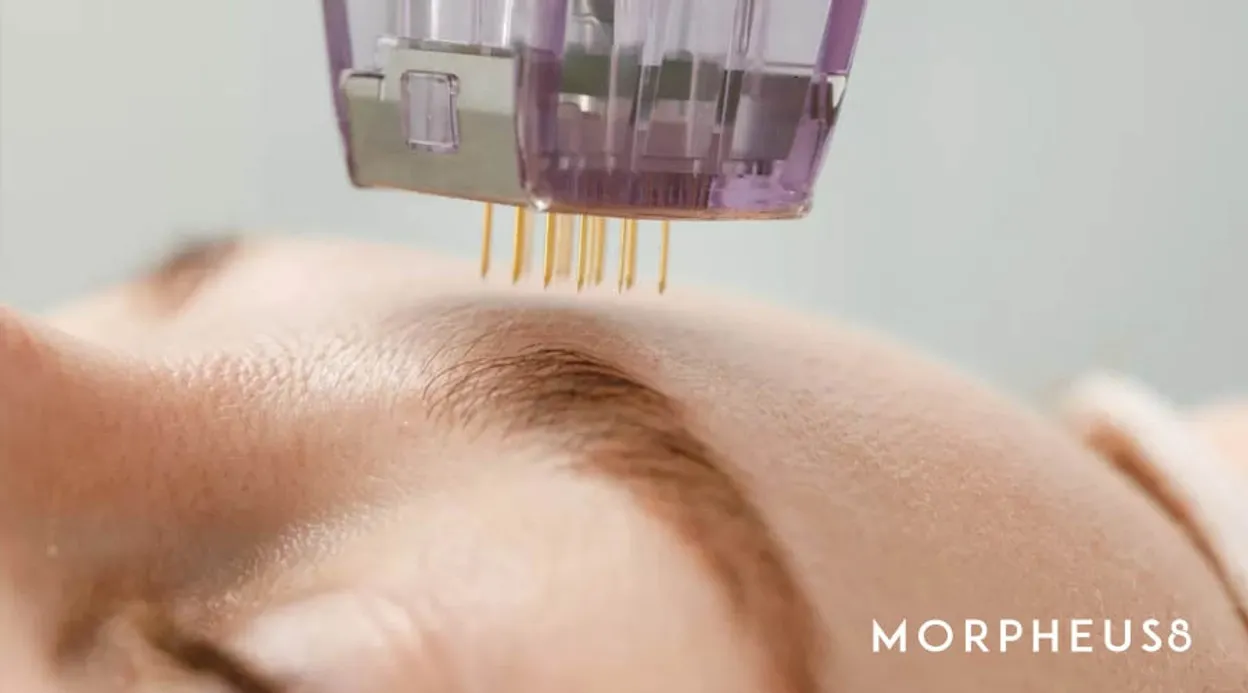
On the Prime, Standard and Body tips, each pin is a needle electrode, coated with insulation along its length except the final 0.5 mm at the tip. A motor drives the needles to the chosen depth, then radiofrequency energy passes between pin pairs at 1 MHz, with a maximum output of 65 watts. Because current can only leave through the exposed tip, the heat forms a small, defined zone at the bottom of each needle tract rather than along the whole channel, and the manual states that energy reaches less than 5 percent of the treated area at a time, leaving untreated tissue in between to speed healing.
The Resurfacing tip is the odd one out, and worth recognising by name. Its pins are blunt and uncoated, its depth is fixed at half a millimetre with the depth control disabled, and its energy is capped lower. It treats the surface of the skin, which is a genuinely different procedure from everything else on this list. If a clinic quotes you a course, it is entirely fair to ask which of the four tips they intend to use, because the answer changes what you are buying.
The depth dial, and the two documents that disagree
Depth is the number that defines this device. Most competing radiofrequency microneedling systems stop at 3.5 or 4 mm; the Morpheus8 manual offers up to 7. Independent reviewers also describe the thermal effect extending roughly 1 mm beyond the needle itself, so a 4 mm setting heats to about 5 mm. In published clinical practice the numbers are more modest than the maximum suggests: facial treatment typically runs at 1 to 2 mm, body treatment at 3 to 4 mm.
Then there is the discrepancy, which clinics almost never mention. The FDA summary for the original Morpheus8 clearance states a maximum treatment depth of 4.0 mm. The manufacturer’s manual offers 7 mm. Both documents are genuine. The manual adds one more detail worth reading twice: settings above 4 mm are intended for areas where the subcutaneous fat is at least 1 cm thick. That says plainly what the deepest settings reach. Not skin, but the fat underneath it, and what heat does when it gets there is documented well enough to deserve an article of its own.
Energy, the second dial
Depth is always paired with energy. The scale runs from 5 to 60, capped at 30 when the needles sit at 1 mm and on the Resurfacing tip. An independent review reports a practitioner rule of thumb of roughly energy 40 at 4 mm, 30 at 3 mm, 20 at 2 mm and 10 at 1 mm, with pulse durations of 300 to 500 milliseconds rising to 2,800 to 4,000 milliseconds for the deeper settings.
Skin tone constrains both dials. The original FDA clearance restricts energies above 62 millijoules per pin to Fitzpatrick skin types I to IV. The manufacturer’s manual advises that types V and darker VI are treated with caution and capped at energy level 20, and in the largest published cohort, 247 patients treated on the face and neck, darker phototypes started at energy 15 or below, with a ceiling of 40 over soft tissue and 25 over bone. If your skin is brown or black, these caps are the most important numbers in this article, and the fuller picture for darker skin is worth reading before any consultation.
Burst, and the numbers nobody outside the company has
The current generation of the platform is marketed as Burst, described as deploying bipolar radiofrequency to multiple depths and programmable energy levels within a single pulse, across four tips: a 12 pin Burst Prime, a 24 pin Burst, a 24 pin Burst Resurfacing and a 40 pin Burst Deep.
What the company does not publish is numeric depths for any Burst tip, and no peer-reviewed clinical study specific to Burst has been identified. The honest position is that the newest version of this device is the one with the least public information attached to it. A clinic quoting precise Burst depths has a source, and you are entitled to ask what it is.
What these settings are actually cleared to do
It would be reasonable to assume that somewhere in the regulatory paperwork, each setting is tied to an outcome: this depth for wrinkles, that energy for scarring. Nothing of the kind exists.
Morpheus8 is 510(k) cleared by the FDA, not FDA approved. Clearance is a substantial equivalence pathway: the manufacturer showed the device is similar enough to one already on the market. It is not a finding that the device works for any cosmetic purpose. The current cleared wording, granted in 2023, covers dermatologic procedures where coagulation or contraction of soft tissue, or haemostasis, is needed, and haemostasis means stopping bleeding. No Morpheus8 clearance names wrinkles, skin tightening, acne scars, cellulite, stretch marks, body contouring or fat reduction.
The 2023 expansion to that soft tissue wording was supported by bench tests on pig tissue outside a living body, carried over from an earlier clearance; the summary records clinical performance data as not applicable. No sham controlled randomised trial of Morpheus8 has been published at all, and the one independent systematic review that excluded industry funded studies rates the radiofrequency microneedling evidence base at Level of Evidence 5, the lowest rung. How clinic marketing turns that paperwork into the claims you see online is a fact check of its own.
The settings menu also carries a warning label. In October 2025 the FDA issued a safety communication on radiofrequency microneedling, reporting burns, scarring, fat loss, disfigurement, nerve damage and cases needing surgical repair, and stating flatly that this is a medical procedure, not a cosmetic treatment. The manual points the same way: it restricts the equipment to qualified medical professionals, instructs operators to use the lowest output setting necessary, and calls for a test spot before a first full session, because the higher the energy applied, the greater the possibility of unintended thermal damage.
The settings are not the small print of a Morpheus8 quote. They are the thing being quoted.
Taking the numbers into the room
None of this is an argument that the machine does nothing. Heat delivered at depth genuinely coagulates and contracts soft tissue; that is exactly what the clearance says it does. It is an argument that the specifics matter more than the brochure, because the same platform can deliver a half millimetre surface polish or seven millimetres of thermal injury into fat, and both are sold as Morpheus8.
So use the menu. Ask which tip will be used on which area. Ask the depth in millimetres, and why that depth for your anatomy. Ask the energy level, and how it has been adjusted for your skin type. Ask whether a test spot will be done first. A practitioner who chose those settings deliberately will enjoy answering, and one who cannot answer has told you something more useful than any brochure. There is a fuller list of questions worth bringing, and if you want the answers for your own face or body rather than in general, book a consultation with us: we will go through tip, depth, energy and suitability in plain numbers, including an honest view of whether this is the right tool for what is bothering you at all.
At a glance
The settings menu, weighed honestly
+ Reasons in favour
- Every specification is published. Pin counts, depth ranges and energy caps all appear in the manufacturer's operator manual, so any setting a clinic quotes can be checked against a document
- Depth adjusts in 1 mm steps and published practice tracks the anatomy: facial treatment typically runs at 1 to 2 mm and body treatment at 3 to 4 mm
- The clearance builds in a skin type safeguard: energies above 62 millijoules per pin are restricted to Fitzpatrick skin types I to IV
− Reasons for caution
- The two authoritative depth documents disagree. The manufacturer's manual offers up to 7 mm while the FDA clearance summary states a maximum treatment depth of 4.0 mm
- The current Burst generation of tips has no published numeric depths and no peer-reviewed clinical study of its own
- No cleared indication ties any of these settings to a cosmetic outcome. The cleared wording covers coagulation or contraction of soft tissue and stopping bleeding
Frequently asked questions
The short version.
01Which Morpheus8 tip is used on the face?
Usually the 24 pin standard tip, with the 12 pin Prime tip for small or awkward areas such as around the eyes. Published facial practice typically sits at 1 to 2 mm of needle depth. The Resurfacing tip is a different case: its pins are blunt and uncoated, fixed at 0.5 mm, and it treats the surface of the skin rather than the layers beneath, which makes it a genuinely different procedure sold under the same brand name.
02How deep does Morpheus8 actually go?
It depends on the document. The manufacturer's manual offers 1 to 7 mm on the standard tip and 2 to 7 mm on the 40 pin Body tip, while the FDA clearance summary for the original Morpheus8 clearance states a maximum treatment depth of 4.0 mm. Independent reviewers also describe the thermal effect extending roughly 1 mm beyond the needle, so a 4 mm setting heats to about 5 mm. The manual notes that settings above 4 mm are intended for areas with at least 1 cm of subcutaneous fat.
03What do the Morpheus8 energy numbers mean?
Energy runs on a scale of 5 to 60, capped at 30 when the needles are set to 1 mm and on the Resurfacing tip. An independent review reports a practitioner rule of thumb of roughly energy 40 at 4 mm, 30 at 3 mm, 20 at 2 mm and 10 at 1 mm. Energy is also constrained by skin type: the clearance restricts energies above 62 millijoules per pin to Fitzpatrick types I to IV, and the manual advises caution and a cap of energy level 20 for types V and darker VI.
04Is Morpheus8 Burst deeper or better than the standard version?
Nobody outside the manufacturer can say. Burst is marketed as delivering radiofrequency to multiple depths and energy levels within a single pulse, but no numeric depths are published for the Burst tips and no peer-reviewed clinical study specific to Burst has been identified. A clinic quoting exact Burst figures should be able to name the source.
05Do higher settings give better results?
There is no published evidence that pushing depth or energy higher produces better cosmetic outcomes, and the manufacturer's manual argues the opposite way: it instructs operators to use the lowest output setting necessary, warns that higher energy carries a greater possibility of unintended thermal damage, and calls for a test spot before a first full session. The independent review literature names user error as the largest single source of complication risk.